
(
)
What a brand sprint can unlock for an AI startup
So… How do you stand out in a sea of AI agents?
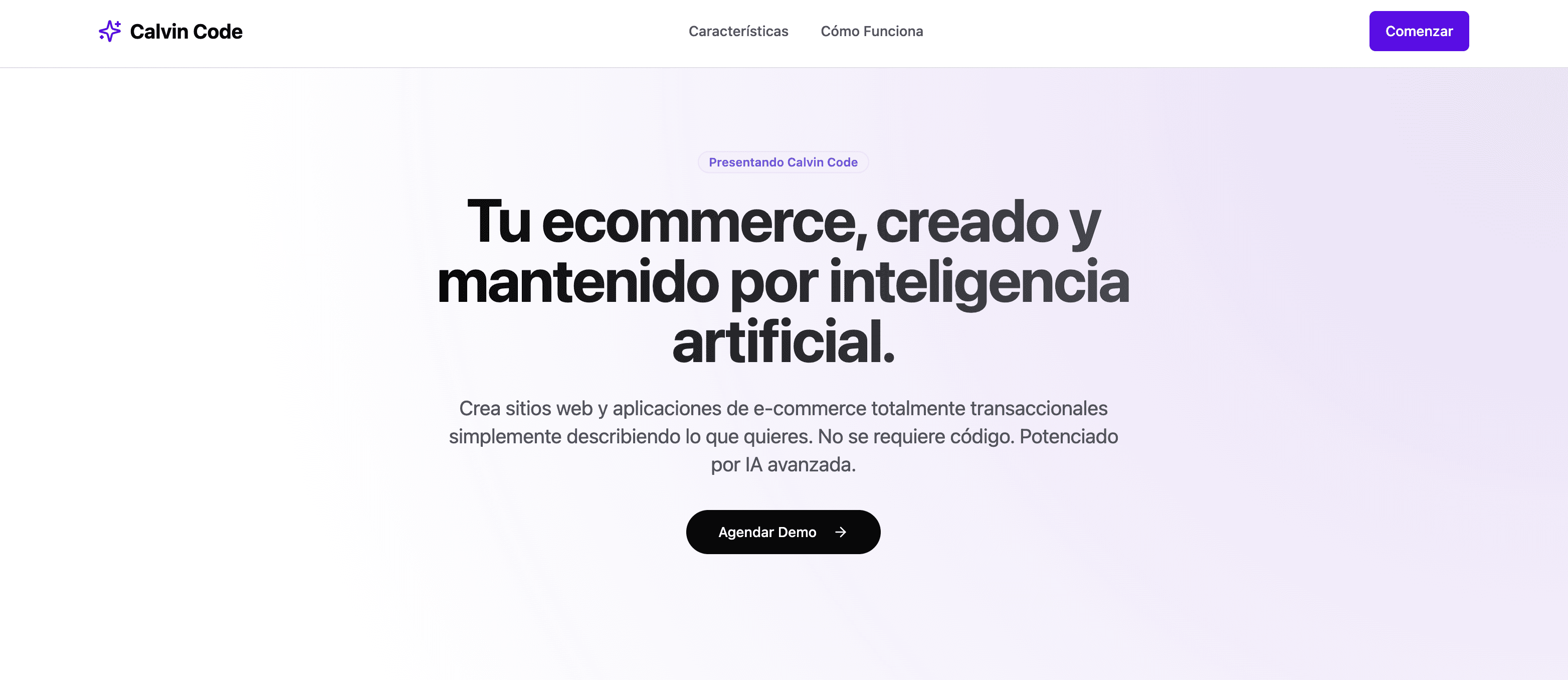
Calvin had a product that worked.Teams using it were saving hours, simplifying operations, and scaling eCommerce without the usual chaos.
Internally, everyone understood the value. But externally, the message wasn’t landing.
The way Calvin talked about itself on the website, in decks, even in conversations, didn’t reflect what made the product different, or why it mattered. The story lacked structure. The message lacked clarity. And the brand risked sounding like yet another early-stage tool in an already crowded space.
That’s where we came in.
The real risk was not competition, it was commoditization.
The AI category is expanding fast, but most players compete on features instead of focus. Tools promise simplicity while demanding complex setups, prompt engineering, and technical fluency. Platforms speak about the future of commerce while eCommerce teams remain stuck in operational bottlenecks.
Calvin was at risk of being perceived as just another AI layer.
At the same time, it lived inside the ecosystem of Go Personal, a brand already positioned around enhancing the front end experience of eCommerce. Without clear separation, both brands risked diluting each other’s message.
The question was not what Calvin does. The real question was where Calvin wins.
BEFORE
AFTER - Check the new website!
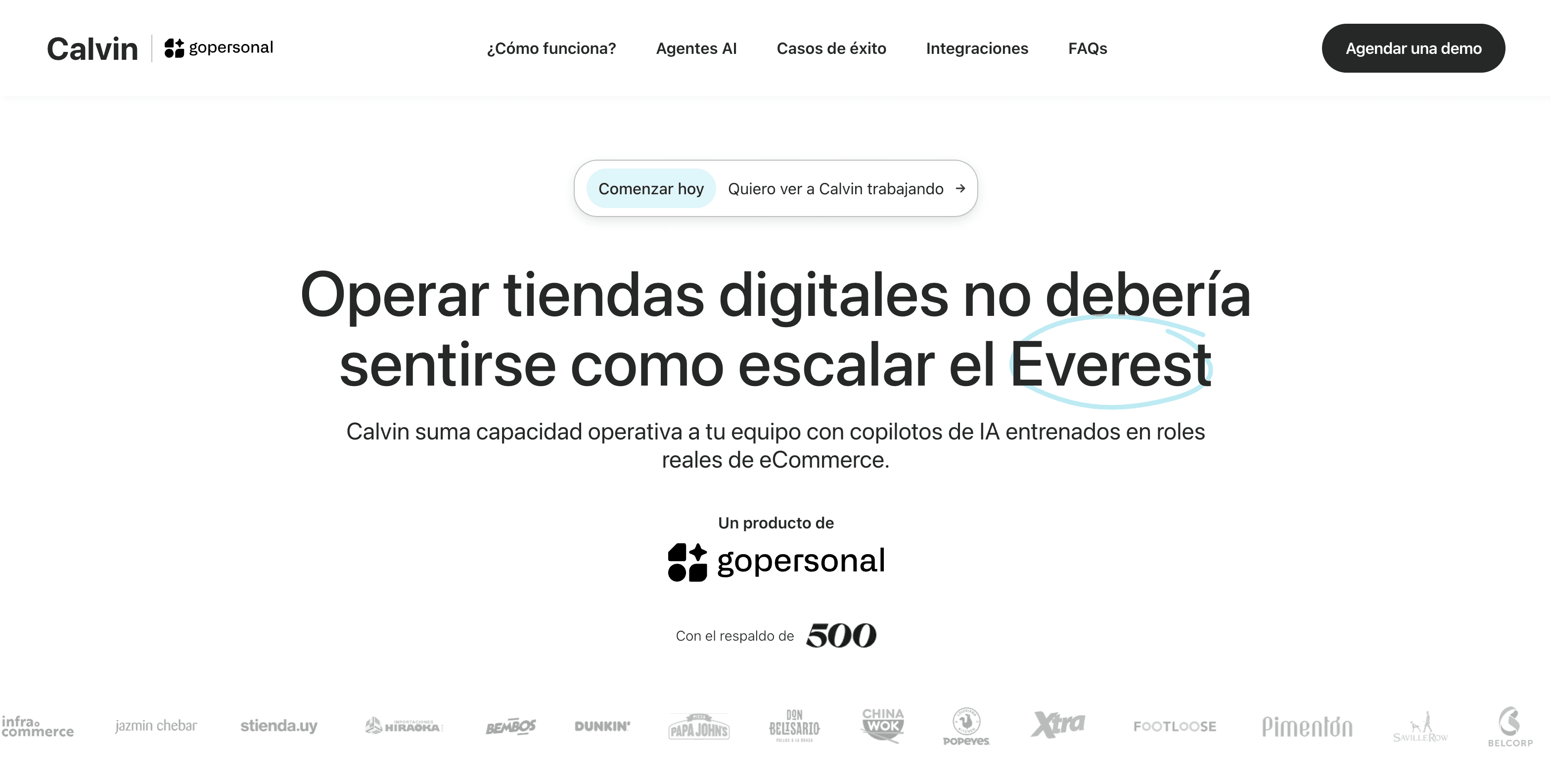
The strategic shift, from AI builder to operational copilot
During the brand sprint, the most important decision was structural. We stopped centering the story on AI and started centering it on operational friction.
Instead of positioning Calvin as a tool that builds eCommerce with AI, we reframed it as an operational copilot for eCommerce teams, designed to remove the bottlenecks that slow development, QA, CRO, and design.
That shift clarified three things immediately:
The audience became specific, eCommerce teams inside agencies and tier 1 and tier 2 companies.
The value moved from innovation to execution.
The differentiation became structural: role based agents trained for real operational tasks instead of generic AI assistants.
This repositioning shifted the focus from building with AI to unblocking the teams behind eCommerce growth.
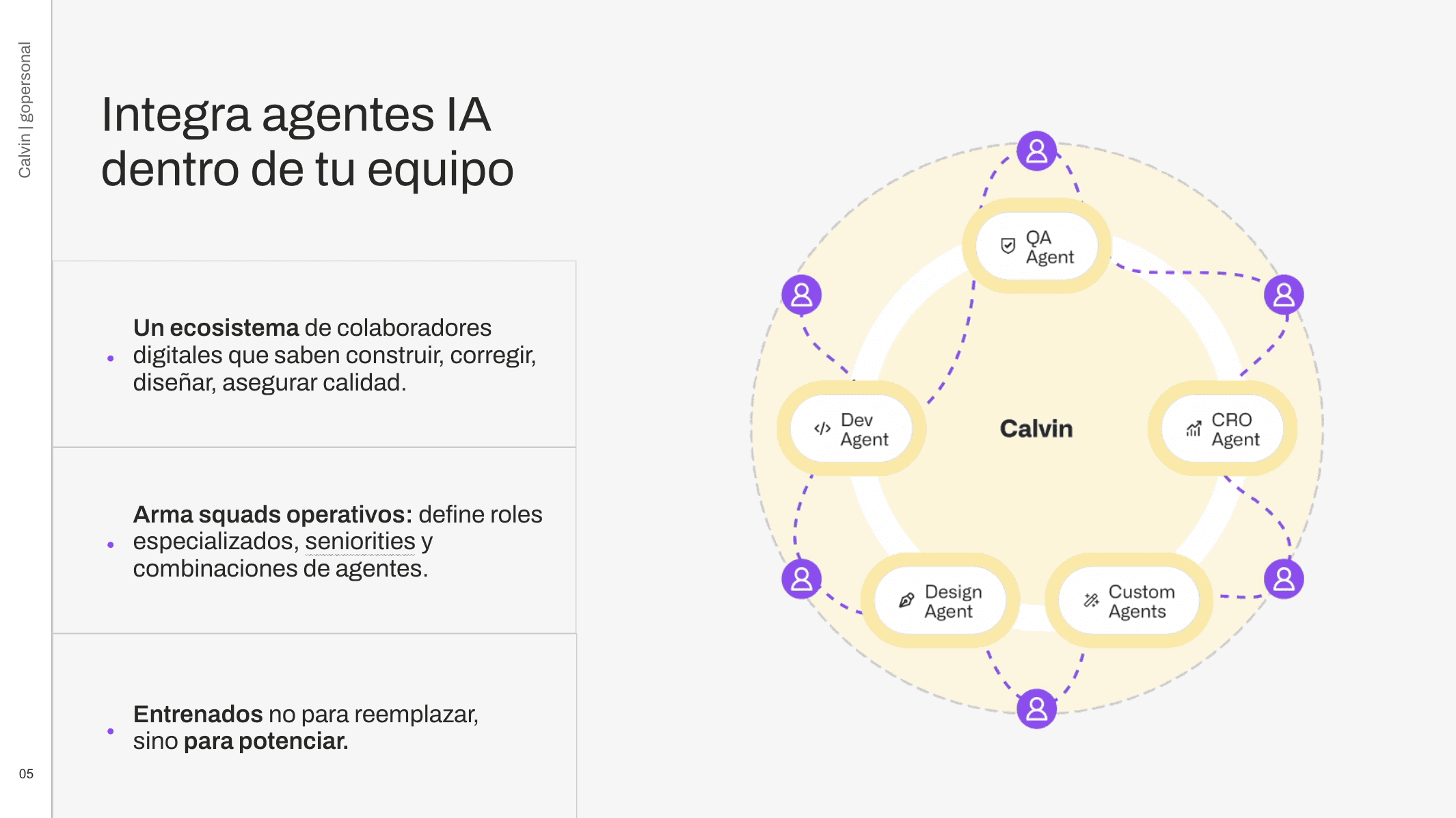
What we actually built
The sprint extended into execution. Together, we:
Defined a sharp positioning and framed the category around it
Rewrote the value proposition to focus on real, specific advantages
Aligned messaging for both in-house teams and agency partners
Brought the strategy to life through a full website revamp and a new sales deck
“A great team effort with fast, high-quality execution.
Together, we clarified Calvin’s positioning and built a value proposition that clearly communicates what sets it apart in the market.”
— Juan Vaz, Founder & CEO @ Go Personal
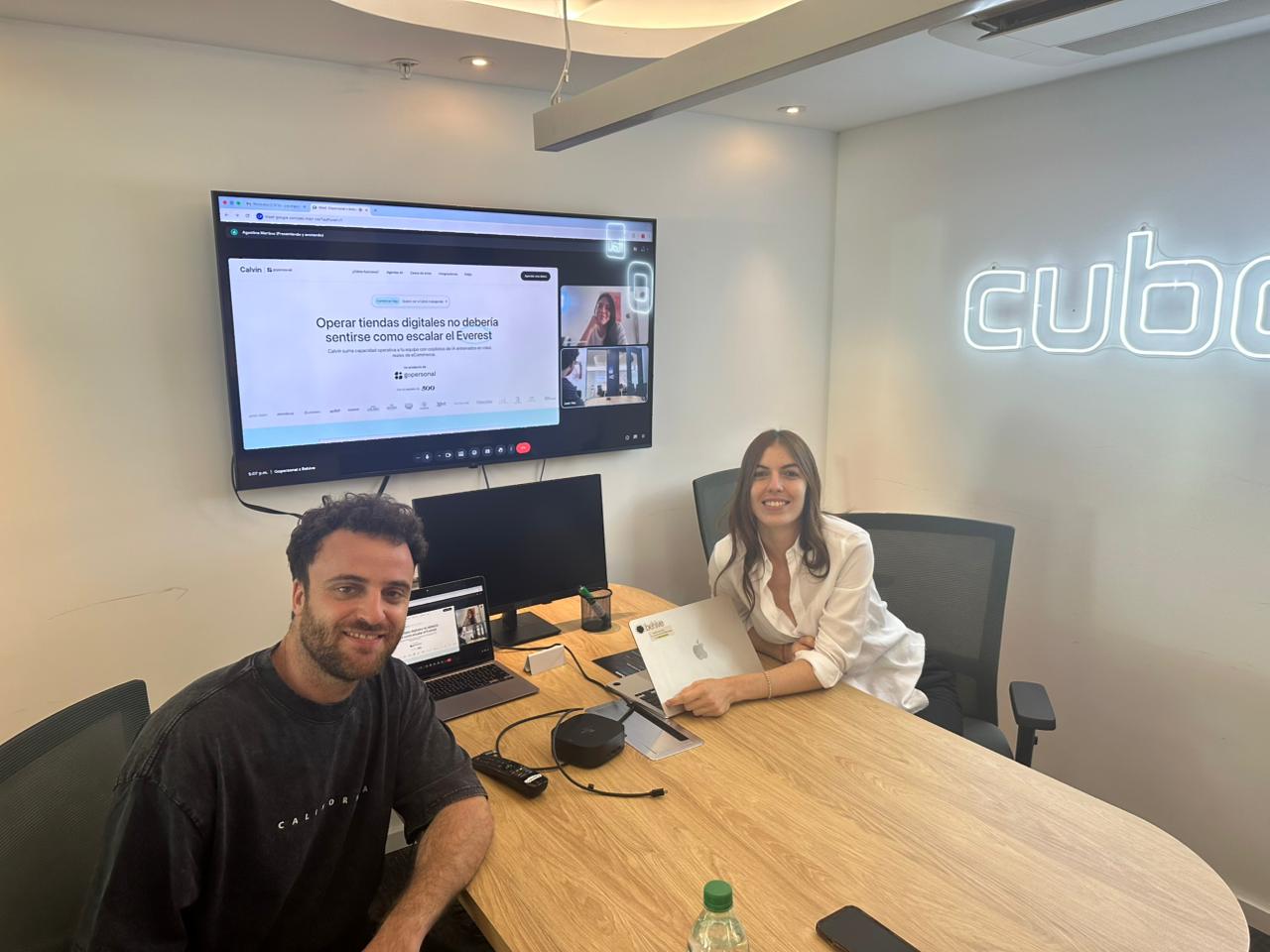
It wasn’t about saying more, it was about saying the right things, clearly and consistently.
The team now explains Calvin in one clear sentence, pitches with conviction, and understands exactly where it stands in a saturated market.
For AI startups, that clarity becomes leverage. When everyone claims intelligence, the advantage belongs to the company that owns a specific tension.

The takeaway for B2B SaaS founders
If you are building in AI right now, ask yourself:
Are you describing technology or tension?
Are you selling automation or relief?
Are you building features or owning a bottleneck?
Calvin did not change the product. It changed the story, and that is what allows a company to start selling with conviction.
More News



TL;DR
Long story short.
We help B2B brands sharpen their positioning, clarify their messaging, and create content people remember.
If people don't get what makes you different, let's talk.
Just click here


(
)
What a brand sprint can unlock for an AI startup
So… How do you stand out in a sea of AI agents?
Calvin had a product that worked.Teams using it were saving hours, simplifying operations, and scaling eCommerce without the usual chaos.
Internally, everyone understood the value. But externally, the message wasn’t landing.
The way Calvin talked about itself on the website, in decks, even in conversations, didn’t reflect what made the product different, or why it mattered. The story lacked structure. The message lacked clarity. And the brand risked sounding like yet another early-stage tool in an already crowded space.
That’s where we came in.
The real risk was not competition, it was commoditization.
The AI category is expanding fast, but most players compete on features instead of focus. Tools promise simplicity while demanding complex setups, prompt engineering, and technical fluency. Platforms speak about the future of commerce while eCommerce teams remain stuck in operational bottlenecks.
Calvin was at risk of being perceived as just another AI layer.
At the same time, it lived inside the ecosystem of Go Personal, a brand already positioned around enhancing the front end experience of eCommerce. Without clear separation, both brands risked diluting each other’s message.
The question was not what Calvin does. The real question was where Calvin wins.
BEFORE
AFTER - Check the new website!
The strategic shift, from AI builder to operational copilot
During the brand sprint, the most important decision was structural. We stopped centering the story on AI and started centering it on operational friction.
Instead of positioning Calvin as a tool that builds eCommerce with AI, we reframed it as an operational copilot for eCommerce teams, designed to remove the bottlenecks that slow development, QA, CRO, and design.
That shift clarified three things immediately:
The audience became specific, eCommerce teams inside agencies and tier 1 and tier 2 companies.
The value moved from innovation to execution.
The differentiation became structural: role based agents trained for real operational tasks instead of generic AI assistants.
This repositioning shifted the focus from building with AI to unblocking the teams behind eCommerce growth.
What we actually built
The sprint extended into execution. Together, we:
Defined a sharp positioning and framed the category around it
Rewrote the value proposition to focus on real, specific advantages
Aligned messaging for both in-house teams and agency partners
Brought the strategy to life through a full website revamp and a new sales deck
“A great team effort with fast, high-quality execution.
Together, we clarified Calvin’s positioning and built a value proposition that clearly communicates what sets it apart in the market.”
— Juan Vaz, Founder & CEO @ Go Personal
It wasn’t about saying more, it was about saying the right things, clearly and consistently.
The team now explains Calvin in one clear sentence, pitches with conviction, and understands exactly where it stands in a saturated market.
For AI startups, that clarity becomes leverage. When everyone claims intelligence, the advantage belongs to the company that owns a specific tension.
The takeaway for B2B SaaS founders
If you are building in AI right now, ask yourself:
Are you describing technology or tension?
Are you selling automation or relief?
Are you building features or owning a bottleneck?
Calvin did not change the product. It changed the story, and that is what allows a company to start selling with conviction.
More News
TL;DR
Long story short.
We help B2B brands sharpen their positioning, clarify their messaging, and create content people remember.
If people don't get what makes you different, let's talk.
Just click here
(
)
What a brand sprint can unlock for an AI startup
So… How do you stand out in a sea of AI agents?
Calvin had a product that worked.Teams using it were saving hours, simplifying operations, and scaling eCommerce without the usual chaos.
Internally, everyone understood the value. But externally, the message wasn’t landing.
The way Calvin talked about itself on the website, in decks, even in conversations, didn’t reflect what made the product different, or why it mattered. The story lacked structure. The message lacked clarity. And the brand risked sounding like yet another early-stage tool in an already crowded space.
That’s where we came in.
The real risk was not competition, it was commoditization.
The AI category is expanding fast, but most players compete on features instead of focus. Tools promise simplicity while demanding complex setups, prompt engineering, and technical fluency. Platforms speak about the future of commerce while eCommerce teams remain stuck in operational bottlenecks.
Calvin was at risk of being perceived as just another AI layer.
At the same time, it lived inside the ecosystem of Go Personal, a brand already positioned around enhancing the front end experience of eCommerce. Without clear separation, both brands risked diluting each other’s message.
The question was not what Calvin does. The real question was where Calvin wins.
BEFORE
AFTER - Check the new website!
The strategic shift, from AI builder to operational copilot
During the brand sprint, the most important decision was structural. We stopped centering the story on AI and started centering it on operational friction.
Instead of positioning Calvin as a tool that builds eCommerce with AI, we reframed it as an operational copilot for eCommerce teams, designed to remove the bottlenecks that slow development, QA, CRO, and design.
That shift clarified three things immediately:
The audience became specific, eCommerce teams inside agencies and tier 1 and tier 2 companies.
The value moved from innovation to execution.
The differentiation became structural: role based agents trained for real operational tasks instead of generic AI assistants.
This repositioning shifted the focus from building with AI to unblocking the teams behind eCommerce growth.
What we actually built
The sprint extended into execution. Together, we:
Defined a sharp positioning and framed the category around it
Rewrote the value proposition to focus on real, specific advantages
Aligned messaging for both in-house teams and agency partners
Brought the strategy to life through a full website revamp and a new sales deck
“A great team effort with fast, high-quality execution.
Together, we clarified Calvin’s positioning and built a value proposition that clearly communicates what sets it apart in the market.”
— Juan Vaz, Founder & CEO @ Go Personal
It wasn’t about saying more, it was about saying the right things, clearly and consistently.
The team now explains Calvin in one clear sentence, pitches with conviction, and understands exactly where it stands in a saturated market.
For AI startups, that clarity becomes leverage. When everyone claims intelligence, the advantage belongs to the company that owns a specific tension.
The takeaway for B2B SaaS founders
If you are building in AI right now, ask yourself:
Are you describing technology or tension?
Are you selling automation or relief?
Are you building features or owning a bottleneck?
Calvin did not change the product. It changed the story, and that is what allows a company to start selling with conviction.
More News
TL;DR
Long story short.
We help B2B brands sharpen their positioning, clarify their messaging, and create content people remember.
If people don't get what makes you different, let's talk.
Just click here